
Edinburgh’s taxi industry is transforming rapidly with 45% of its fleet now electric or hybrid vehicles, cutting emissions by 30% since 2023. Technology and sustainability are reshaping how residents and visitors book rides across the city. This guide explores the latest 2026 trends, from AI-powered apps to green taxis, helping you navigate Edinburgh’s evolving transportation landscape and make smarter booking decisions.
Table of Contents
- Introduction To Taxi Booking In Edinburgh 2026
- Technological Advances In Taxi Booking Apps
- Environmental Sustainability In Taxi Services
- Cost-Saving Strategies For Taxi Booking
- Common Misconceptions About Taxi Booking In 2026
- User Experience Innovations Shaping Taxi Services
- Conceptual Framework Of Taxi Booking Trends
- Practical Tips For Booking Taxis In Edinburgh 2026
- Explore Trusted Taxi Services With Capital Cars
- FAQ
Key takeaways
| Point | Details |
|---|---|
| AI technology | Artificial intelligence optimises routing and pricing, reducing travel times and costs for Edinburgh taxi users. |
| Green fleet growth | Electric and hybrid taxis now comprise 45% of Edinburgh’s fleet, significantly lowering carbon emissions. |
| Smart savings | Dynamic pricing, price comparison tools, and loyalty programmes help users save money on taxi bookings. |
| Enhanced safety | Real-time tracking, in-app messaging, and emergency alerts improve passenger security and convenience. |
| Multimodal integration | Apps connecting taxis with buses and trams create seamless journeys across Edinburgh’s transport network. |
Introduction to taxi booking in Edinburgh 2026
Edinburgh’s transport ecosystem combines traditional black cabs, modern private hire vehicles, buses, and trams into an increasingly connected network. The shift towards app-based bookings has accelerated dramatically, with street hailing declining as residents and tourists embrace digital platforms. Urban transport integration continues expanding in 2026, creating opportunities for smarter travel choices.
Residents typically seek cost-effective regular transport for commuting and daily errands, whilst visitors prioritise convenience and reliability for airport transfers and sightseeing. These distinct needs drive different booking behaviours. Locals often use loyalty programmes and off-peak discounts, whereas tourists value instant availability and clear pricing without hidden fees.
City policies actively encourage technological innovation in taxi services. Edinburgh Council supports electric vehicle adoption through charging infrastructure and incentives. Regulatory frameworks now require taxi apps to meet strict data protection standards whilst maintaining service quality. This creates a favourable environment for both established operators and new entrants offering innovative solutions.
Key developments shaping taxi bookings include:
- AI-powered routing reducing journey times by up to 20%
- Integration with public transport timetables for seamless connections
- Contactless payment becoming standard across all platforms
- Real-time availability updates preventing lengthy waits
The taxi cab online booking landscape has matured significantly, offering users unprecedented control over their journeys. Apps provide transparent pricing, driver ratings, and estimated arrival times before confirming bookings. This transparency builds trust and encourages repeat usage, particularly amongst younger demographics who expect digital-first experiences across all services.
Technological advances in taxi booking apps
Artificial intelligence fundamentally changes how taxi services operate in Edinburgh. AI optimises routing and pricing, analysing traffic patterns, weather conditions, and demand fluctuations to suggest the fastest routes and fairest fares. Machine learning algorithms predict busy periods, enabling better driver distribution across the city and shorter pickup times for passengers.
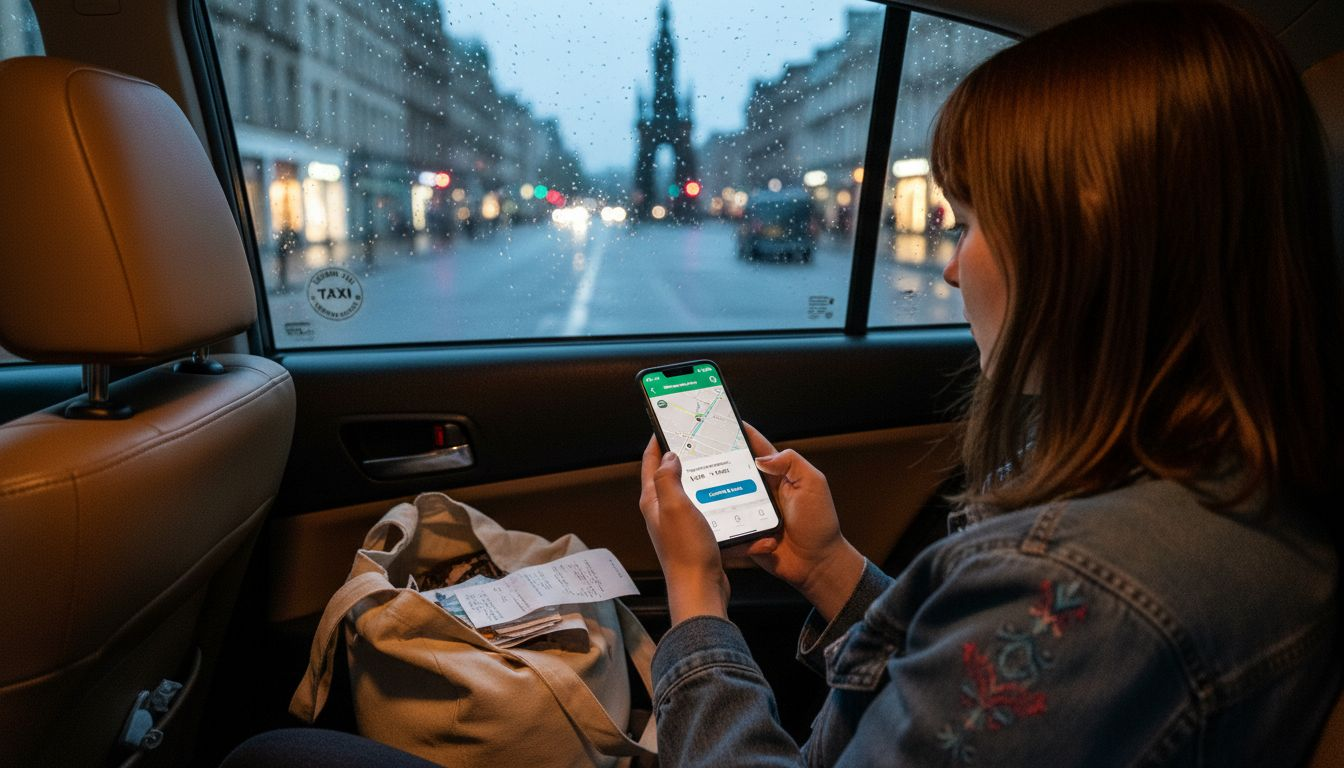
Real-time tracking represents another significant advancement. Passengers see their driver’s exact location and estimated arrival time within seconds of booking. In-app messaging allows direct communication without sharing personal phone numbers, maintaining privacy whilst enabling coordination for pickup points. These features particularly benefit visitors unfamiliar with Edinburgh’s geography.
Multimodal integration sets 2026 apart from previous years. Leading booking apps now incorporate bus and tram schedules, suggesting combinations that save money or time. A journey from Leith to the airport might combine a taxi to Haymarket with the tram for the final leg, cutting costs by 40% compared to a direct taxi ride.
Comparison of booking app types:
| App type | Strengths | Limitations |
|---|---|---|
| Single-mode taxi | Specialised features, loyalty rewards | No public transport options |
| Multimodal platform | Cost savings, journey flexibility | Complex interface for simple trips |
| Aggregator service | Price comparison across operators | May lack direct customer support |
Key technological features include:
- Fare estimates before booking confirmation
- Split payment options for shared rides
- Accessibility filters for wheelchair-accessible vehicles
- Carbon footprint tracking for eco-conscious users
Pro tip: Choose apps integrating local transport options to unlock significant savings, especially for longer journeys where combining taxis with trams proves most economical.
The evolution of mobile apps transforming taxi booking continues accelerating. Voice-activated bookings and predictive scheduling based on your calendar represent the next frontier. Some apps already suggest bookings for recurring appointments, learning your patterns to offer proactive service.
Environmental sustainability in taxi services
Edinburgh’s commitment to sustainability drives remarkable changes in its taxi fleet composition. Electric and hybrid vehicles constitute 45% of licensed taxis, reducing CO2 emissions by 30% compared to 2023 levels. This transformation positions Edinburgh as a leader amongst UK cities in green taxi adoption.
City initiatives accelerate this transition through multiple mechanisms. The Low Emission Zone encourages operators to upgrade older diesel vehicles. Grants offset the higher purchase costs of electric taxis, whilst an expanding charging network addresses range anxiety. These policies create a virtuous cycle where green taxis become increasingly practical and profitable.
Current fleet composition breakdown:
| Vehicle type | Fleet percentage | Emission reduction |
|---|---|---|
| Fully electric | 25% | 100% vs diesel |
| Hybrid | 20% | 60% vs diesel |
| Modern diesel | 35% | 30% vs older models |
| Older vehicles | 20% | Baseline |
Consumer preferences increasingly favour environmentally responsible options. Surveys show 68% of Edinburgh residents consider environmental impact when booking taxis, with this figure rising to 78% amongst under-35s. Many apps now prominently display vehicle emission ratings, allowing conscious choices without sacrificing convenience.
Environmental and economic benefits converge for operators. Electric taxis cost significantly less per mile to run despite higher upfront prices. Lower maintenance requirements and exemption from certain charges improve profitability. These savings often translate to competitive fares, making green options attractive beyond environmental considerations.
Key sustainability developments:
- Rapid charging stations at taxi ranks citywide
- Incentive programmes rewarding electric vehicle bookings
- Carbon offset options integrated into payment flows
- Fleet renewal schemes accelerating older vehicle retirement
Statistic highlight: With 45% fleet electrification achieved by 2026, Edinburgh aims for 75% by 2028, reinforcing its position as Scotland’s greenest taxi market.
Cost-saving strategies for taxi booking
Dynamic pricing creates opportunities for savvy users to reduce taxi costs substantially. Unlike traditional fixed tariffs, app-based pricing fluctuates based on demand, time, and route. Understanding these patterns helps you book when fares drop, particularly during mid-morning and mid-afternoon lulls between peak periods.
Price comparison tools embedded in booking apps revolutionise cost management. 40% of UK taxi users save money compared to street hailing by comparing multiple operators before confirming rides. These tools display real-time quotes from competing services, ensuring you always access the best available rate for your specific journey.
Off-peak discounts and loyalty programmes reward regular users. Many operators offer 10-15% reductions for journeys booked outside rush hours. Loyalty schemes accumulate points redeemable against future rides, effectively creating ongoing discounts for frequent passengers. Business travellers particularly benefit from corporate accounts with preferential rates.
Practical cost-saving tactics include:
- Setting fare alerts for regular routes to track price trends
- Booking 30 minutes ahead rather than immediately for lower surge pricing
- Choosing slightly later pickup times to avoid peak demand charges
- Combining shorter taxi rides with public transport for longer journeys
Pro tip: Configure fare alerts in your preferred booking apps to receive notifications when prices drop below your target threshold, maximising savings on regular routes.
The cheapest taxi in Edinburgh often depends on timing rather than operator. A journey costing £18 during evening rush hour might drop to £12 if delayed by 45 minutes. This flexibility benefits those with adaptable schedules, whilst urgent trips inevitably incur premium rates.
Understanding the cost-saving taxi booking guide principles transforms occasional users into informed consumers. Small adjustments like avoiding Friday evenings or booking airport transfers during daytime hours compound into significant annual savings for regular taxi users.
Common misconceptions about taxi booking in 2026
Myth: Taxi apps always cost more than street hailing due to commission fees charged to drivers.
Reality: Apps frequently offer lower fares through competitive pricing and promotional discounts. Price transparency prevents the inflated quotes sometimes given to tourists by street-hailed drivers. Dynamic pricing occasionally creates premium rates during peak demand, but overall app users pay less on average.
Myth: Taxi booking apps collect excessive personal data, compromising user privacy without meaningful protections.
Reality: New regulations reduced data collection by 30%, limiting information to journey essentials. Apps must now clearly disclose data usage and obtain explicit consent for marketing purposes. Users control privacy settings, choosing minimal data sharing whilst still accessing full booking functionality.
Myth: Electric taxis provide inferior service with limited range, risking breakdowns on longer journeys.
Reality: Modern electric taxis exceed 250 miles per charge, comfortably covering Edinburgh to Glasgow return trips. Operators carefully manage charging schedules, ensuring vehicles always maintain adequate range. Performance matches or exceeds traditional vehicles, with instant torque providing smoother acceleration.
Common misconceptions debunked:
- Apps require constant internet connectivity throughout journeys (offline mode preserves bookings once confirmed)
- Surge pricing applies randomly without warning (apps display pricing clearly before booking confirmation)
- Traditional black cabs offer better safety than app-booked private hire (both undergo identical licensing and insurance requirements)
- Cancellation always incurs fees regardless of circumstances (most apps waive fees for cancellations within grace periods)
- Older passengers cannot navigate booking apps effectively (simplified interfaces and phone booking options accommodate all demographics)
Regulatory improvements in 2026 enhance transparency across the industry. Licensing authorities require apps to display total journey costs upfront, preventing surprise charges. Complaint mechanisms provide rapid resolution for disputes, with operators facing penalties for systematic overcharging. These protections build consumer confidence in digital booking platforms.
User experience innovations shaping taxi services
Real-time location tracking transforms passenger confidence and convenience. Location and communication features allow you to see your driver approaching on a live map, eliminating uncertainty about pickup times. This visibility reduces stress, particularly at unfamiliar locations or during time-sensitive journeys like airport transfers.
In-app messaging facilitates seamless coordination without exposing personal phone numbers. You can send pickup instructions, request specific routes, or notify drivers of delays through secure channels. This communication proves invaluable in Edinburgh’s complex geography, where Old Town addresses often require clarification.
Safety features prioritise passenger wellbeing through multiple mechanisms. Emergency alert buttons connect directly to support teams and share live location data. Journey sharing allows friends or family to track your route in real time. Driver verification through photo matching ensures the person collecting you matches app records, preventing unauthorised pickups.
Intuitive interface design accelerates booking processes. Modern apps complete reservations in under 30 seconds through saved addresses, payment methods, and preference profiles. Voice commands enable hands-free booking, whilst accessibility features support passengers with visual or motor impairments through screen readers and simplified controls.
Key user experience enhancements:
- Ride receipts automatically generated and emailed for expense tracking
- Split fare functionality dividing costs amongst multiple passengers
- Favourite driver selection for preferred service consistency
- Multi-stop journey planning within single bookings
Pro tip: Use apps enabling driver ratings and detailed feedback to maintain service quality, as operators actively respond to consistent patterns in user reviews.
The Edinburgh taxi service landscape benefits from these innovations through increased customer satisfaction and loyalty. Operators investing in superior user experiences attract repeat bookings, creating competitive pressure that raises standards across the entire market. Passengers ultimately benefit from this quality arms race.
Conceptual framework of taxi booking trends
Three interconnected pillars structure Edinburgh’s taxi booking evolution: technological innovation, environmental sustainability, and user-centric design. These elements interact dynamically, each reinforcing and enabling progress in the others. Understanding this framework helps anticipate future developments and make informed choices as both consumers and industry participants.
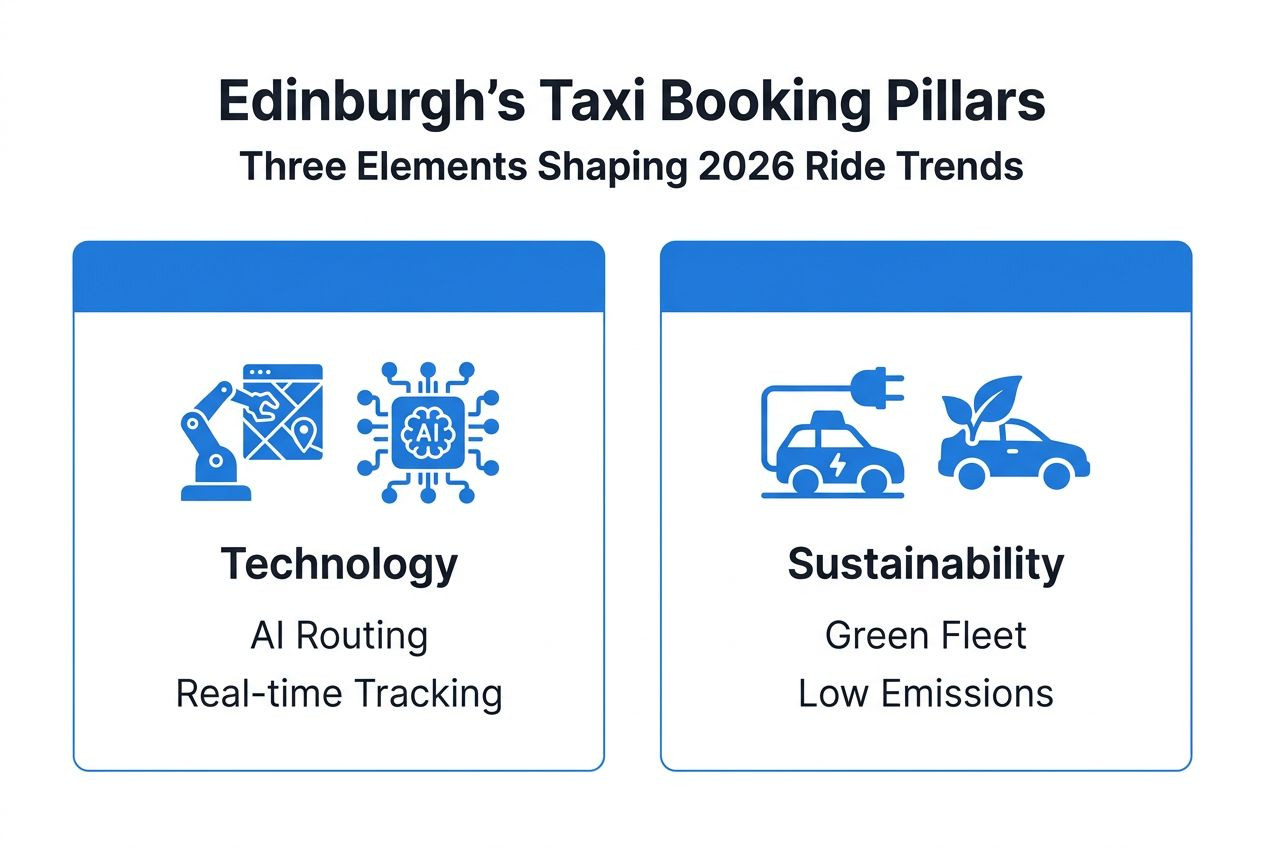
Technological innovation provides the foundation through AI routing, real-time tracking, and seamless payment systems. These capabilities enable sophisticated features impossible with traditional dispatch methods. Innovation also supports sustainability by optimising routes to reduce fuel consumption and facilitating electric vehicle integration through charging network apps.
Environmental sustainability influences consumer preferences and regulatory requirements simultaneously. Green fleet adoption attracts environmentally conscious passengers whilst satisfying emissions targets. Sustainability initiatives often drive technological advancement, such as developing AI algorithms that prioritise eco-friendly routing options over purely fastest routes.
User-centric design ensures technologies and sustainability efforts translate into genuine passenger value. Features like transparent pricing, accessible interfaces, and safety mechanisms address real user needs rather than pursuing innovation for its own sake. Design thinking connects technical capabilities with human requirements, creating services people actually want to use.
Framework pillar comparison:
| Pillar | Key features | Impact on users | Impact on operators |
|---|---|---|---|
| Technology | AI routing, real-time tracking | Faster, cheaper journeys | Improved efficiency, higher utilisation |
| Sustainability | Electric fleet, carbon tracking | Reduced environmental guilt | Lower running costs, regulatory compliance |
| User design | Intuitive apps, safety features | Enhanced convenience, peace of mind | Increased loyalty, positive reviews |
These pillars interact through feedback loops. Superior user experiences increase app adoption, generating data that improves AI algorithms. Better routing reduces emissions, supporting sustainability goals. Environmental credentials attract users, creating business cases for continued green investment. This virtuous cycle accelerates progress across all dimensions simultaneously.
Understanding this framework empowers strategic thinking about taxi services. Consumers recognise that choosing apps emphasising all three pillars supports long-term industry improvement. Operators appreciate that excellence requires balanced investment rather than focusing narrowly on single aspects like price or technology alone.
Practical tips for booking taxis in Edinburgh 2026
Applying insights from Edinburgh’s taxi evolution improves your booking experience immediately. These practical steps combine technological advantages, sustainability considerations, and cost awareness into actionable guidance for both residents and visitors navigating the city’s transport options.
-
Download multiple booking apps to compare prices and availability across operators before confirming rides, ensuring access to the best current rates.
-
Enable notifications for fare alerts on regular routes, allowing you to book when dynamic pricing drops below average levels.
-
Filter search results for electric or hybrid vehicles when environmental impact matters, as most apps now prominently display this information.
-
Review and adjust privacy settings quarterly to maintain control over personal data whilst accessing app features you value.
-
Book airport transfers and important journeys 24 hours ahead to secure lower advance booking rates and guaranteed availability.
-
Combine taxi rides with tram or bus segments for longer journeys, using multimodal apps to identify cost-effective connections.
-
Schedule pickups during off-peak hours (10am-4pm, 7pm-10pm) when possible to avoid surge pricing and reduce wait times.
-
Maintain updated payment methods and saved addresses to streamline booking during time-sensitive situations.
Pro tip: Regularly update app settings and check for new features, as operators continuously add capabilities like carbon offset options and enhanced route preferences.
The book a taxi Edinburgh process becomes second nature with these practices. Small optimisations compound over time, transforming occasional cost savings into substantial annual benefits. Residents making five weekly taxi journeys could save £400 annually through strategic booking timing and app selection alone.
Environmental considerations needn’t compromise convenience. Electric taxis now offer comparable availability to traditional vehicles across Edinburgh. Choosing green options supports fleet transformation whilst often accessing operator incentives that reduce your fare. This alignment of personal values with practical benefits exemplifies modern taxi booking’s evolution.
Explore trusted taxi services with capital cars
Capital Cars leads Edinburgh’s transition towards sustainable, technology-enabled transportation. Our fleet includes electric and hybrid vehicles reducing emissions by 30% whilst maintaining the reliability and comfort you expect. We specialise in private hire taxi Edinburgh Airport transfers, business travel, and local journeys throughout the city.
Our modern booking platform integrates the conveniences discussed throughout this guide. Real-time tracking, transparent pricing, and seamless payment create stress-free experiences for both residents and visitors. Whether you need reliable airport transfers or daily transportation, our service combines technological innovation with personal attention to detail.
Explore our comprehensive private hire taxi Edinburgh options today. Experience how professional service, environmental responsibility, and cutting-edge booking technology converge to deliver Edinburgh’s finest taxi service.
FAQ
What are the benefits of using AI-powered taxi booking apps?
AI optimises routing by analysing real-time traffic, weather, and demand patterns, reducing wait times by up to 20% and cutting journey durations significantly. Dynamic pricing balances cost efficiency with demand fluctuations, often delivering lower fares than traditional fixed-rate systems whilst ensuring driver availability during peak periods.
How can I ensure my privacy when booking taxis via apps?
Review app privacy settings immediately after installation, disabling unnecessary data sharing whilst maintaining core booking functionality. Choose platforms complying with 2026 data protection standards, which limit information collection to journey essentials and require explicit consent for marketing purposes, giving you complete control over personal information usage.
Are electric taxis more expensive to book in Edinburgh?
Electric taxi fares remain comparable to conventional vehicles due to competitive pressure and operator cost savings from lower fuel and maintenance expenses. Many apps allow filtering for eco-friendly rides without premium charges, whilst some operators offer small discounts on electric bookings to encourage sustainable choices and accelerate fleet transition.
How do multimodal apps save money on Edinburgh journeys?
Multimodal platforms suggest combinations of taxis with buses or trams that reduce total journey costs by 30-40% compared to single-mode taxi trips. These apps analyse your route and identify optimal connection points where switching transport modes delivers substantial savings whilst adding minimal travel time, particularly effective for longer cross-city journeys.
What safety features should I look for in taxi booking apps?
Prioritise apps offering real-time journey sharing with trusted contacts, emergency alert buttons connecting directly to support teams, and driver verification through photo matching before entering vehicles. In-app messaging preserving phone number privacy and automated ride receipts creating audit trails further enhance personal security throughout your journey.