
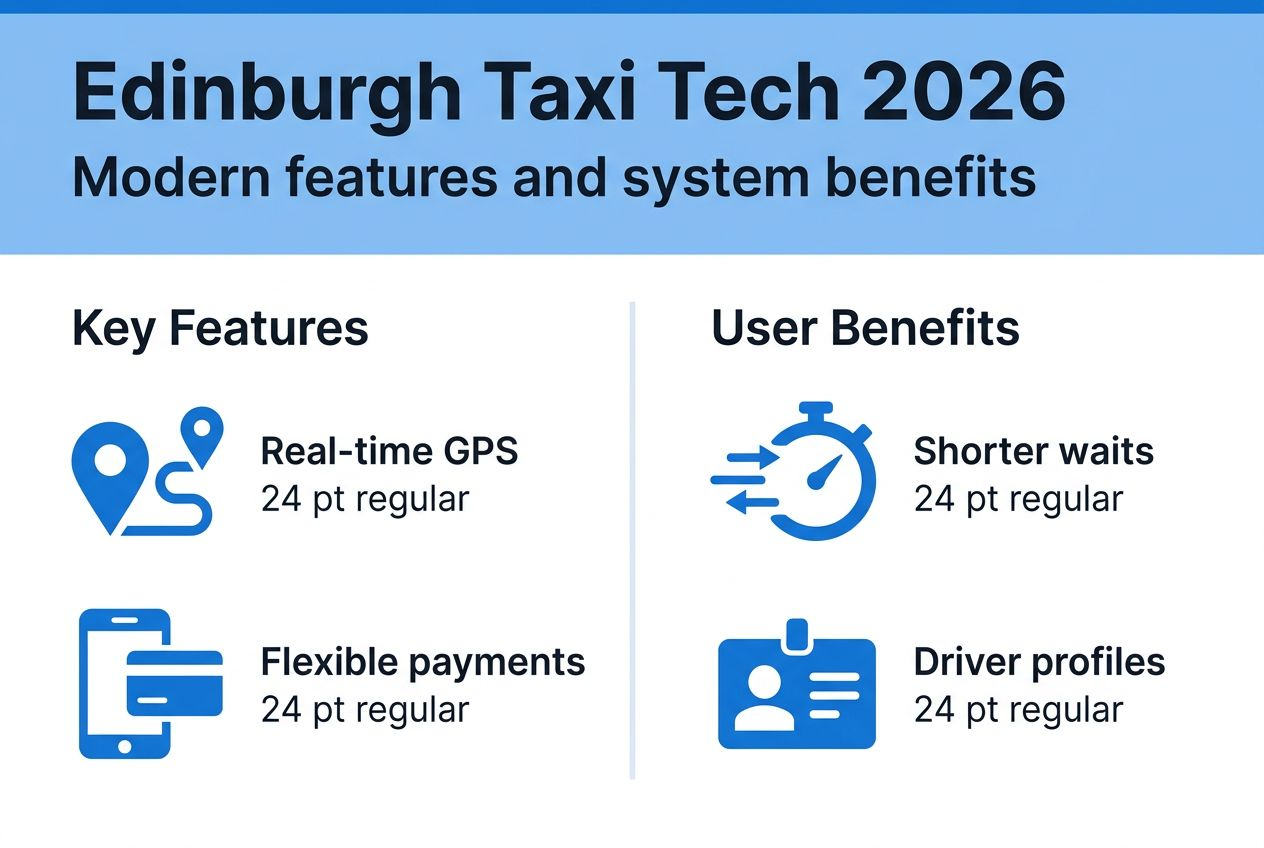
Technology has transformed taxi booking in Edinburgh. GPS integration has reduced average wait times by 30%, making journeys more predictable and convenient. This guide explores how modern taxi apps work, the features that matter most, and what Edinburgh residents and tourists should expect from contemporary transport technology in 2026.
Table of Contents
- How Technology Improves Taxi Booking Efficiency In Edinburgh
- Backend System Design: The Engine Behind Modern Taxi Booking Apps
- Features Shaping User Experience In Edinburgh Taxi Apps
- Challenges And Nuances: Surge Pricing, Privacy, And Market Focus In Edinburgh
- Discover Edinburgh’s Easiest Taxi Booking With Capital Cars
Key takeaways
| Point | Details |
|---|---|
| Technology reduces wait times | GPS and real-time tracking optimise dispatch, cutting wait times by 30% on average in Edinburgh. |
| Apps enhance convenience | Quick booking, multiple payment methods, and live vehicle tracking improve passenger experience. |
| Backend architecture matters | Service-oriented systems enable scalability, handling demand spikes and supporting diverse transport needs. |
| Privacy and pricing impact trust | GDPR compliance protects data whilst surge pricing can raise fares by up to 2.5x during peak times. |
| Local focus drives success | Edinburgh apps succeed by addressing city-specific needs rather than copying global models. |
How technology improves taxi booking efficiency in Edinburgh
GPS technology has revolutionised how taxis find passengers and navigate Edinburgh’s streets. Real-time location data allows dispatch systems to identify the nearest available vehicle, reducing the time between booking and arrival. This precision eliminates guesswork and ensures drivers take optimal routes, particularly valuable during Edinburgh’s busy festival periods.
Passengers benefit from transparent tracking systems that show exactly where their taxi is and when it will arrive. This visibility reduces anxiety about missed connections or late arrivals, especially critical for airport transfers. The taxi cab online booking experience now includes estimated arrival times, driver details, and direct contact options, creating accountability and trust.
Multiple payment gateways integrated into apps streamline transactions. You can pay with cash, card, or digital wallets without fumbling for change or worrying about card readers. This flexibility accommodates tourists unfamiliar with local currency and residents who prefer contactless payments.
Key technological components:
- GPS positioning for accurate vehicle location and route optimisation
- Real-time dispatch algorithms matching passengers with nearest available drivers
- Integrated payment systems supporting cash, card, Apple Pay, and Google Pay
- Push notifications keeping passengers informed throughout the booking process
- Two-way communication channels between drivers and passengers
Pro Tip: Book your taxi 10 to 15 minutes before you need it during peak hours. Even with optimised dispatch, demand surges during events like Hogmanay or Edinburgh Festival can extend wait times temporarily.
Local challenges persist despite technological advances. Edinburgh’s geography, with its hills and narrow Old Town streets, complicates route planning. Matching fluctuating tourist demand with available drivers requires sophisticated algorithms that learn seasonal patterns and event schedules. The best apps adapt to these local conditions rather than applying generic global solutions.
“Technology doesn’t replace human judgement in taxi services. It enhances driver expertise with data-driven insights, creating a partnership between experience and innovation that benefits passengers.”
Backend system design: the engine behind modern taxi booking apps
The systems powering taxi apps evolved dramatically over the past decade. Early platforms used monolithic architectures where all functions operated within a single codebase. This approach worked for small-scale operations but created bottlenecks as user bases grew. Uber’s backend transitioned to service-oriented architecture to handle rapid global expansion, and Edinburgh operators followed similar paths.
Modern taxi apps use microservices, where separate modules handle specific tasks like rider requests, driver allocation, payment processing, and mapping. This modularity allows simultaneous support for multiple service types. A single platform can manage taxis, food delivery, and parcel logistics without functions interfering with each other.

Backend complexity centres on real-time matching algorithms. When you request a taxi, the system must instantly evaluate dozens of variables: driver locations, current traffic conditions, predicted journey times, driver ratings, and vehicle types. It calculates the optimal match within milliseconds, balancing efficiency with fairness to drivers and quality for passengers.
Database architecture determines how quickly apps respond. Early systems used Python with object-relational mapping layers suitable for thousands of rides daily. Scaling to millions requires distributed databases that replicate data across multiple servers, ensuring no single point of failure. Edinburgh services handling airport transfers need this reliability, as delays cascade when systems crash during peak travel periods.
Critical backend functions in order of processing:
- Rider authentication verifying user identity and payment methods
- Geolocation services determining precise pickup coordinates
- Driver matching algorithms evaluating availability and proximity
- Dynamic pricing calculations adjusting fares based on demand
- Route optimisation suggesting fastest paths accounting for traffic
- Transaction processing securing payments and distributing funds
- Data analytics tracking patterns to improve future service
The phone taxi option remains integrated within modern systems as a fallback. Voice bookings feed into the same dispatch algorithms, ensuring consistent service quality regardless of booking channel.
Features shaping user experience in Edinburgh taxi apps
Quick booking features eliminate friction from the taxi request process. Capital Cars’ app demonstrates this with three-tap booking that remembers your frequent destinations and preferred payment methods. You open the app, confirm pickup location, and request a ride without typing addresses or selecting options repeatedly.
Safety features build trust, particularly for tourists unfamiliar with Edinburgh. Sharing trip details with contacts through features like “Buddy Phone” allows friends or family to monitor your journey in real-time. Driver identification, including photos, vehicle registration, and ratings, helps passengers verify they’re entering the correct vehicle.
Payment flexibility matters more than many realise. The Capital Cars app accepts cash, debit cards, credit cards, Apple Pay, and Google Pay, accommodating diverse preferences. Tourists from regions where cash dominates appreciate this choice, whilst business travellers can expense digital payments automatically.
Local discounts incentivise app adoption. Capital Cars offers a 20% discount through their app, making digital booking more economical than traditional phone bookings. This pricing strategy rewards tech-savvy users whilst encouraging others to try new booking methods.
Essential app features passengers value most:
- Saved addresses reducing repetitive typing for regular routes
- Fare estimates before booking confirming expected costs
- Driver tracking showing real-time vehicle location on maps
- Trip history accessing past journeys for expense tracking
- Rating systems holding drivers accountable for service quality
- In-app messaging contacting drivers without revealing phone numbers
Pro Tip: Enable push notifications to receive updates about driver arrival, traffic delays, and promotional offers. This keeps you informed without constantly checking the app, particularly useful when preparing to leave home or work.
GDPR compliance protects your personal data within these apps. Edinburgh taxi services must obtain explicit consent for data collection, explain how information is used, and allow you to delete your account with all associated data. This privacy protection distinguishes legitimate operators from less scrupulous alternatives that might misuse passenger information.
Booking a taxi online through trusted platforms ensures your payment details and location history remain secure. Encryption standards prevent unauthorised access, whilst regular security audits identify vulnerabilities before they’re exploited.
Challenges and nuances: surge pricing, privacy, and market focus in Edinburgh
Surge pricing represents the most controversial aspect of taxi app technology. Fares can increase by up to 2.5 times during peak times and events in Edinburgh, particularly during festivals or New Year celebrations. This dynamic pricing aims to incentivise more drivers to work when demand peaks, theoretically improving availability.
The reality frustrates passengers who feel trapped by necessity. When you need to catch a flight or attend an important meeting, paying inflated fares seems unavoidable. Drivers benefit from higher earnings during these periods, but passengers question whether the system truly improves service or simply exploits urgent needs.
Surge pricing comparison:
| Aspect | Benefits | Drawbacks |
|---|---|---|
| For drivers | Higher earnings during peak demand periods | Unpredictable income when surge ends suddenly |
| For passengers | More drivers available when needed most | Significantly higher costs during emergencies |
| For operators | Balances supply and demand efficiently | Damages brand reputation and customer loyalty |
Privacy concerns extend beyond GDPR compliance. Taxi apps collect extensive data about your movements, creating detailed profiles of your routines, favourite destinations, and travel patterns. This information holds commercial value for marketing purposes but also poses risks if breached. Edinburgh passengers should scrutinise privacy policies and minimise data sharing when possible.
Successful taxi apps focus on city-specific challenges rather than replicating global models. Edinburgh’s taxi booking trends differ from London or Glasgow due to tourism patterns, geography, and local regulations. Apps that understand festival season demands, airport connection timing, and neighbourhood characteristics outperform generic platforms.
Local market considerations:
- Festival season requires capacity planning for 50% to 70% demand increases
- Airport transfers need reliability guarantees for early morning and late night flights
- Old Town accessibility limitations demand drivers familiar with complex one-way systems
- University term times create predictable demand patterns in student areas
- Weather impacts, particularly during winter, affect driver availability and route planning
Matching supply with demand remains technically challenging. Algorithms must predict where passengers will need taxis before requests arrive, positioning drivers proactively. This forecasting uses historical data, event schedules, and weather patterns but cannot account for unexpected surges. The tension between efficiency and fairness continues driving technical innovation in dispatch systems.
Discover Edinburgh’s easiest taxi booking with Capital Cars
After understanding how technology shapes modern taxi services, you might wonder which Edinburgh operator delivers on these promises. Capital Cars combines advanced app features with local expertise, offering the convenience you’ve just read about.
Our taxi booking apps feature quick three-tap booking, real-time vehicle tracking, and multiple secure payment options including the 20% app discount. The fleet ranges from executive saloons to eight-seater MPVs, accommodating solo travellers to large groups with equal efficiency.
Airport transfers demand particular reliability, which Capital Cars prioritises through dedicated private hire taxi services to Edinburgh Airport. Flight monitoring ensures drivers adjust pickup times for delays, eliminating missed connections. Professional chauffeurs familiar with terminal layouts and optimal routes make airport transfer services stress-free, whether you’re catching early morning departures or arriving on late evening flights.
Local knowledge combines with technological capabilities to handle Edinburgh’s unique challenges. Drivers understand festival period congestion, navigate Old Town’s narrow streets confidently, and suggest optimal pickup points for difficult locations. This expertise complements app features, creating service quality that exceeds what technology alone can deliver.
FAQ
What technology is used to reduce taxi wait times in Edinburgh?
GPS integration enables precise vehicle location tracking and optimised dispatch routing. This technology has reduced average wait times by 30% in Edinburgh by matching passengers with the nearest available taxis. Real-time traffic data further refines arrival estimates, improving reliability.
How do taxi apps ensure passenger safety during journeys?
Safety features include real-time driver identification with photos and vehicle details, plus journey sharing capabilities. The Buddy Phone feature allows passengers to share trip details with emergency contacts who can monitor progress. Driver rating systems and GPS tracking create accountability throughout journeys.
What are typical costs and timelines for developing taxi booking apps?
Minimum viable product development starts around £65,000 with three to six months build time, focusing on core user journeys like booking, tracking, and payment. Full-featured apps with advanced algorithms and multiple service types require significantly higher investment. Partnering with experienced developers reduces timelines and avoids costly architectural mistakes.
Why does surge pricing occur and how much do fares increase?
Surge pricing activates during high demand periods to incentivise more drivers onto the roads. Edinburgh sees fare increases up to 2.5 times normal rates during festivals, New Year, and major events. Whilst controversial, this dynamic pricing aims to balance supply with extraordinary demand spikes that would otherwise leave passengers without available taxis.
What payment methods do Edinburgh taxi apps accept in 2026?
Modern apps support cash, debit cards, credit cards, Apple Pay, Google Pay, and sometimes account billing for corporate users. This flexibility accommodates tourists, business travellers, and residents with varying preferences. Digital payments process automatically upon journey completion, eliminating transaction delays and providing instant receipts for expense tracking.